Why Online Reviews Matter for Local Businesses
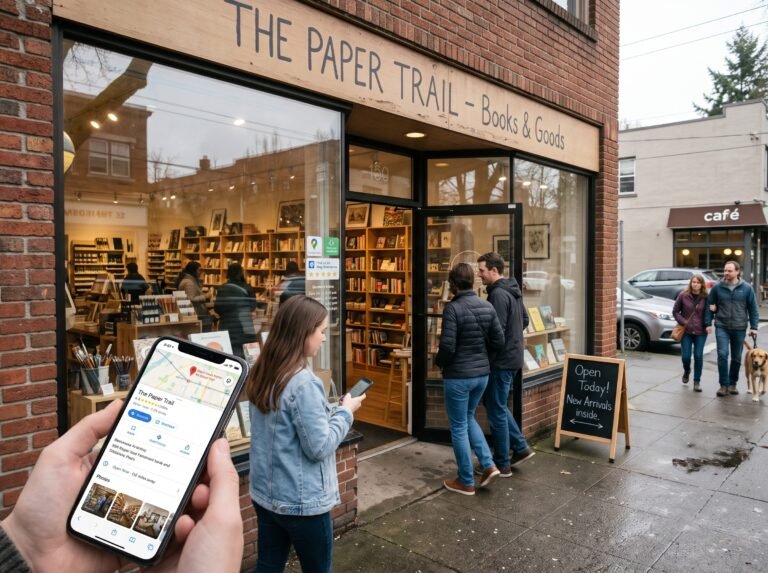
Every few weeks I sit across from a business owner who wants to talk about anything except online reviews for local businesses, yet that’s usually where the problem lives. They tell me some version of the same story. “We do great work, and our customers love us. So why is the shop down the street getting all the calls?” In most cases, I already know the answer before I open their Google Business Profile. They have eleven reviews, and the newest one is from two winters ago. Meanwhile, the competitor has 140, and a few of those came in this month.
That gap isn’t cosmetic. In fact, after years in local search, I’ve come to see reviews as the closest thing this industry has to one lever that moves rankings, conversions, and reputation together. Of course, links matter. Categories matter too, and proximity matters more than anyone would like. However, reviews are the one signal that customers read, Google weighs, and AI assistants now summarize before a person ever reaches your website.
So this piece explains why. Specifically, it draws on the research I actually use when I advise clients, as well as the habits I’ve seen separate the businesses that grow from the ones that stall.
Online Reviews for Local Businesses Replaced the Neighbor Over the Fence
Word of mouth used to travel as fast as a backyard conversation. For example, you asked a coworker which dentist they liked, or you called the plumber your father had trusted for twenty years. That instinct hasn’t gone anywhere. Instead, it simply moved onto a screen.
Harvard Business School researcher Michael Luca documented this shift early. In his study of Seattle restaurants, he found that by 2009 Yelp reviews covered about 70 percent of the city’s restaurants, whereas the local newspaper had reviewed only about 5 percent. In other words, ordinary diners had become the most thorough restaurant critics in town almost overnight. Luca also saw revenue shift away from chains and toward independent restaurants as Yelp spread through a market. Consequently, online reviews for local businesses level the playing field for small operators who can’t outspend a national brand on advertising.
That’s the main reason I care so much about this topic. After all, a franchise has brand recognition doing the heavy lifting. An independent HVAC company, a family bakery, or a solo attorney doesn’t. For them, therefore, the combined voice of past customers is the brand.
What Consumers Say About Online Reviews for Local Businesses
I pay close attention to the BrightLocal Local Consumer Review Survey because it has asked consumers the same questions about online reviews for local businesses for more than a decade. As a result, the trends are meaningful rather than anecdotal. The 2026 edition surveyed 1,002 US adults in February 2026, and several findings stood out.
First, 97 percent of consumers read reviews for local businesses. In short, that’s effectively everyone. So if you think your customers are the exception, they aren’t.
Second, people do more than glance at a star average. In the survey, 85 percent said positive reviews make them more likely to use a business, while 77 percent said negative reviews put them off. Reviews, then, no longer just break a tie between two equal options. Rather, they decide whether you make the shortlist at all.
Volume, Freshness, and Platform Spread
Third, there’s a real volume threshold. Nearly half of consumers, 47 percent, say they won’t use a business with fewer than 20 reviews. For instance, I’ve watched owners with a perfect 5.0 rating on six reviews wonder why the phone stays quiet. To a shopper, though, six reviews looks like a business that just opened, or one nobody bothers to talk about.
Fourth, and this is the one I raise most often in client meetings, 74 percent of consumers only care about reviews written in the last three months. Therefore, a glowing review from 2023 does very little for you today. Put simply, freshness is now part of credibility.
Finally, BrightLocal reports that the average consumer checks six different review sites before choosing a business. Google and Facebook still lead. Even so, Apple Maps usage nearly doubled in one year, from 14 percent to 27 percent. Clearly, your reputation isn’t one profile. Instead, it’s the sum of every place people find you.
How Online Reviews for Local Businesses Feed Google’s Algorithm
Owners sometimes ask me whether reviews really affect rankings, or whether marketers just say that to sell software. On this question, however, Google has been unusually direct.
In its help page on how to improve your local ranking on Google, Google says local results are based mainly on relevance, distance, and prominence. Prominence means how well known a business is, and Google says plainly that review count and review score factor into local ranking. It also adds that more reviews and positive ratings can improve a business’s local position. Because Google rarely names a ranking input this openly, I treat that line as a standing instruction.
Likewise, practitioner research supports it. The Whitespark Local Search Ranking Factors report is the closest thing local SEO has to an industry consensus. David Mihm created it in 2008, and since 2017 Darren Shaw has run it. The 2026 edition gathered input from 47 local search experts across 187 individual factors. Notably, the signals those experts rate highly for online reviews for local businesses include a strong numerical Google rating, the number of reviews that contain written text, and how recent those reviews are. In addition, the 2026 report added a new scoring area for AI search visibility, which brings me to the biggest change in my work this year.
What Your Customers’ Words Do for You
There’s also a quieter mechanism. Reviews are written in the customer’s words, not yours. So when a client writes about “emergency water heater repair on a Sunday,” that phrase becomes part of the public text attached to your listing. In fact, I often see Google pull review snippets that match the searcher’s query right into the local results. Of course, you can’t stuff keywords into a review, and you shouldn’t try. Still, a steady flow of detailed reviews naturally widens the language tied to your business.
Why AI Tools Now Read Online Reviews for Local Businesses
If you take one new idea from this article, make it this one. BrightLocal’s 2026 data showed the share of consumers using AI tools such as ChatGPT, Gemini, and Google’s AI Mode to find local businesses rising from 6 percent to 45 percent in a single year, one of the sharpest local retail store trends of 2026. As a result, AI is now the third most used discovery channel, behind only Google and Facebook. Over the same period, meanwhile, Google’s own share of local discovery fell from 83 percent to 71 percent.
Think about what an AI assistant does when someone asks for the best family dentist in town. Unlike a friend, it has no personal opinion. Instead, it draws on what’s published across the web, and online reviews for local businesses are among the richest, most specific sources available. Furthermore, BrightLocal’s follow up research found that many people use AI to summarize reviews and then check those summaries against the reviews themselves.
The practical lesson, then, is that thin, sparse, or stale review profiles now hurt you in two places: the map pack and the chat window. For that reason, I tell clients not to rely on Google alone. A healthy presence on Facebook, Yelp, Apple Maps, and the business directory listings for your trade gives these systems more independent evidence to work with.
The Revenue Link Behind Online Reviews for Local Businesses
I’m wary of marketing claims that can’t be tied to dollars, so I value research that does the hard work of showing cause and effect. Luca’s Yelp study, summarized in Harvard Business School Working Knowledge, is still the one I come back to. First, he matched Yelp ratings against revenue data from the Washington State Department of Revenue. Then, because Yelp rounds ratings to the nearest half star, he could isolate the effect of the rating itself. Ultimately, a one star increase led to roughly a 5 to 9 percent increase in revenue for independent restaurants. By contrast, chains saw no comparable effect.
Similarly, Northwestern University’s Spiegel Research Center reached the same conclusion from a different angle. In its study How Online Reviews Influence Sales, it found that a product with five reviews was 270 percent more likely to be purchased than a product with none. Moreover, the biggest gains came from those first few reviews, and the effect was stronger for higher priced items.
That last point matters for local service providers. After all, hiring a roofer, choosing a family lawyer, or booking a contractor for a kitchen remodel are high consideration decisions. When the stakes rise, people read more carefully, and so online reviews for local businesses carry more weight. Thus, if your average job runs into the thousands, your review profile is probably doing more selling than any ad you run.
Why a Perfect 5.0 Can Work Against You
This surprises almost every owner I work with: a perfect score isn’t the goal.
Indeed, the Spiegel researchers found that purchase likelihood peaks when the average rating is between 4.2 and 4.5 stars, then starts to fall as it approaches a flawless 5.0. In an interview with MarketingSherpa, the center’s research director explained that when shoppers see nothing but perfect reviews, they start to suspect manipulation. Likewise, Google’s own guidance notes that a mix of positive and negative feedback often feels more trustworthy.
As a result, clients find this freeing. For example, a three star review from a customer who waited too long for a callback isn’t a disaster. On the contrary, it’s proof that your profile is real. What prospects really want to see, after all, is how you handled it.
Freshness Is the Factor Owners Underestimate
Most businesses get reviews in bursts. Typically, someone reads an article like this one, emails their whole customer list, collects thirty reviews in two weeks, and then goes quiet for a year. I understand the impulse. However, it works against you in two ways.
On the consumer side, about three in four people only care about reviews from the past three months. On the algorithm side, similarly, recency keeps showing up among the signals local search experts consider important for online reviews for local businesses. Consequently, a burst followed by silence looks, to people and machines alike, like a business that peaked and faded.
Instead, what I coach is a steady rhythm. For instance, a dental office that sees forty patients a week doesn’t need forty reviews a week. Rather, it needs a reliable process that brings in a few every week, every month, with no end date. In the end, slow and steady beats one big push almost every time.
Reviews Are Free Market Research
Beyond rankings and conversions, reviews also tell you things about your own business that are hard to learn any other way. In fact, customers will write things in a review they would never say to your face at the counter.
When I audit a client’s review profile, I look for patterns rather than individual comments. For example, if the same complaint about wait times or billing shows up in five reviews over six months, that’s an operational problem, not a marketing one. Likewise, if customers keep praising one technician by name, that person is part of your competitive advantage and probably deserves recognition. Similarly, praise for something you never advertise, like spotless job sites or fast quotes, is a selling point your website should be talking about.
For this reason, I encourage owners to read their reviews monthly with their managers, the same way they’d look at a financial report. Businesses that treat feedback as data tend to improve faster. Then that improvement shows up in the next round of reviews. Overall, it’s a loop that rewards attention.
Responding to Online Reviews for Local Businesses
BrightLocal’s research shows that 89 percent of consumers expect business owners to respond to reviews. Furthermore, 42 percent say they’re unlikely to use a business that ignores them. In other words, silence can cost you a large share of the people reading your profile.
My rule for clients is simple. First, reply to every review, positive or negative, within a few days. For positive reviews, thank the person by name and also mention something specific, like the service they got or the team member who helped. However, avoid copy and paste replies. People notice when twenty responses in a row say the same thing, and as a result it reads as indifference.
Handling Negative Reviews
With negative reviews, the response isn’t really for the reviewer. Instead, it’s for the next hundred people who read the exchange. So stay calm, acknowledge the problem without arguing details in public, explain what you’ve done or will do, and then offer a direct way to continue the conversation privately. In my experience, a well handled one star review can win more business than a dozen generic five star ones, because it shows prospects exactly what happens when something goes wrong.
Google itself notes that replies are public and can help build trust with customers. Therefore, treat each one as a short piece of marketing copy, because that’s what it is.
Building a Review Process That Stays Within the Rules
Collecting online reviews for local businesses isn’t complicated. Even so, it does take a system. Below is the approach I set up for most local clients.
Set Up the Basics
- Claim, verify, and complete your Google Business Profile. After all, you can’t reply to reviews until the business is verified, and a half finished profile undercuts the trust your reviews build.
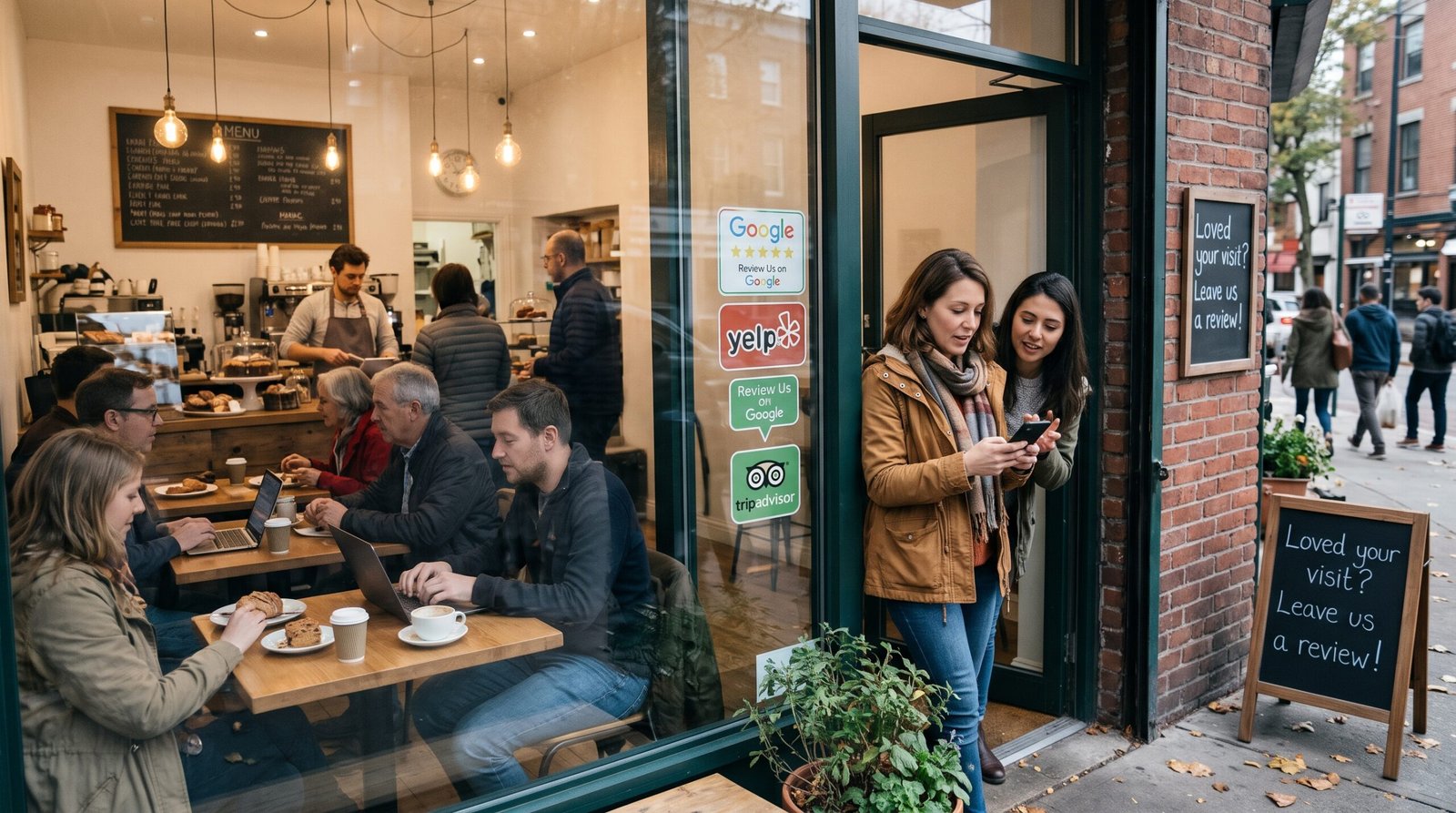
- Get your direct review link and QR code. Google provides both inside the profile under the option to get more reviews, as explained in its guide to getting more Google reviews. Notably, removing even one or two clicks increases how many customers follow through.
Ask at the Right Moment
- Ask when the customer is happiest. Generally, the best moment is right after a job is finished, a problem is solved, or a customer says something kind. If you wait a week, however, the enthusiasm fades, along with the detail.
- Make the ask personal. For example, a technician at the door saying “It would really help us if you shared how today went” works better than an automated email almost every time. So use automation as a reminder, not a replacement.
- Put the link wherever customers already are. Invoices, receipts, thank you texts, email signatures, and appointment reminders are all natural spots.
Keep It Honest and Consistent
- Ask every customer, not just the happy ones. This is an ethical point and, as the next section explains, a legal one too.
- Check every platform weekly. In addition, make one person responsible so reviews never sit unanswered.
Finally, a word on what to avoid. Google says business owners shouldn’t offer incentives for reviews, and it also requires that reviews reflect genuine experiences. Therefore, never write reviews for yourself, never have staff post as customers, and never send only satisfied customers to Google while steering unhappy ones to a private form.
The FTC Rule Changed the Risk
For years, buying a batch of fake reviews was treated as a gray area that might get a listing suspended at worst. In the United States, however, that era is over.
In August 2024, the Federal Trade Commission announced a final rule banning fake reviews and testimonials, and it took effect that October. Specifically, the rule prohibits creating, buying, or selling fake reviews, including AI generated reviews and reviews attributed to people who don’t exist. It also bans paying for or rewarding reviews that express a particular sentiment. In addition, it restricts insider reviews that don’t disclose the writer’s connection to the business, and it prohibits threats or intimidation used to suppress negative reviews. Most importantly, it lets the FTC seek civil penalties against knowing violators, up to $51,744 per violation when the rule was announced.
For that reason, I tell every client the same thing. If a vendor offers you a package of fake online reviews for local businesses, walk away. The possible fines on a single campaign could exceed what many small businesses earn in a year. Even worse, the damage to your reputation if you’re caught could last far longer.
Mistakes Local Businesses Make With Online Reviews
After enough audits, patterns emerge, and as a result the same handful of errors keeps coming up.
The first is treating reviews as a one time project instead of an ongoing habit. The second is replying only to negative reviews, since that signals you only pay attention when something goes wrong. The third is arguing with reviewers in public, which almost never ends well, however right you are. The fourth is ignoring platforms beyond Google, especially now that AI tools draw from the wider web. Finally, the fifth is asking for reviews in a way that feels transactional, with a generic link buried in a long automated email nobody finishes reading.
Fortunately, none of these are hard to fix. Rather, they just need someone in the business to own the process.
Final Thoughts
Strip away the jargon, and my case for online reviews for local businesses comes down to one idea. Reviews are the most honest marketing you’ll ever have, because you don’t write them. Customers trust them, Google ranks with them, and AI assistants increasingly speak through them.
In the end, the businesses that win in local search are rarely the ones with the flashiest website or the biggest ad budget. Instead, they’re the ones that do good work, ask for feedback consistently, reply like real people, and keep that rhythm going month after month. So start with your next customer. Ask how it went, and then make it easy for them to say so publicly.
Frequently Asked Questions About Online Reviews for Local Businesses
How many online reviews do local businesses need?
No number guarantees a ranking, and Google doesn’t publish one. However, consumer research does suggest a practical minimum: the BrightLocal Local Consumer Review Survey found that 47 percent of people won’t use a business with fewer than 20 reviews. So get past that mark first, and then focus on a steady flow of new reviews rather than a total.
Do online reviews for local businesses really help local SEO?
Yes. In fact, Google’s help page on improving your local ranking lists review count and review score as part of prominence, one of its three main local ranking factors.
Should I respond to every review, including the positive ones?
Yes. BrightLocal reports that 89 percent of consumers expect owners to respond. Also, replying to positive reviews shows prospects you value every customer, not just the unhappy ones.
Is it legal to offer a discount in exchange for a review?
Google’s guidelines say businesses shouldn’t offer incentives for reviews at all. Furthermore, in the US, the FTC rule on consumer reviews specifically prohibits rewarding reviews that express a particular sentiment. Therefore, the safest course is to never attach a reward to a review request.
How should I handle a fake or unfair negative review?
First, reply calmly and factually for the sake of future readers. Then, if the review breaks Google’s posting guidelines, report it through your Business Profile, as explained in Google’s guide to getting more Google reviews.
Which review sites matter besides Google?
Facebook, Yelp, Apple Maps, and directories for your industry all count, and most consumers check several. Moreover, since AI tools now draw on reviews from across the web, a wider presence helps you show up in more recommendations.
Can AI tools like ChatGPT use my reviews when recommending businesses?
AI assistants build local recommendations from publicly available information, and online reviews for local businesses are a major part of it. In fact, BrightLocal’s 2026 research found that 45 percent of consumers now use AI tools for local recommendations. Consequently, keeping your reviews current on several platforms matters more than ever.
References
- BrightLocal. Local Consumer Review Survey 2026
- BrightLocal. Small Businesses Can’t Keep Up With Consumer Review Expectations
- Whitespark. Local Search Ranking Factors 2026
- Whitespark. Why Local Business Reviews Are So Important
- Google Business Profile Help. How to Improve Your Local Ranking on Google
- Google Business Profile Help. Tips to Get More Google Reviews
- Harvard Business School Working Knowledge. The Yelp Factor: Are Consumer Reviews Good for Business?
- Medill Spiegel Research Center, Northwestern University. How Online Reviews Influence Sales
- MarketingSherpa. University Study: How Online Reviews Affect Sales
- Federal Trade Commission. FTC Announces Final Rule Banning Fake Reviews and Testimonials